
Laboratory & Research
Stable, pure on-site hydrogen for analytical instruments, GC/MS, fuel cell research, and university laboratories -- eliminating cylinder logistics.
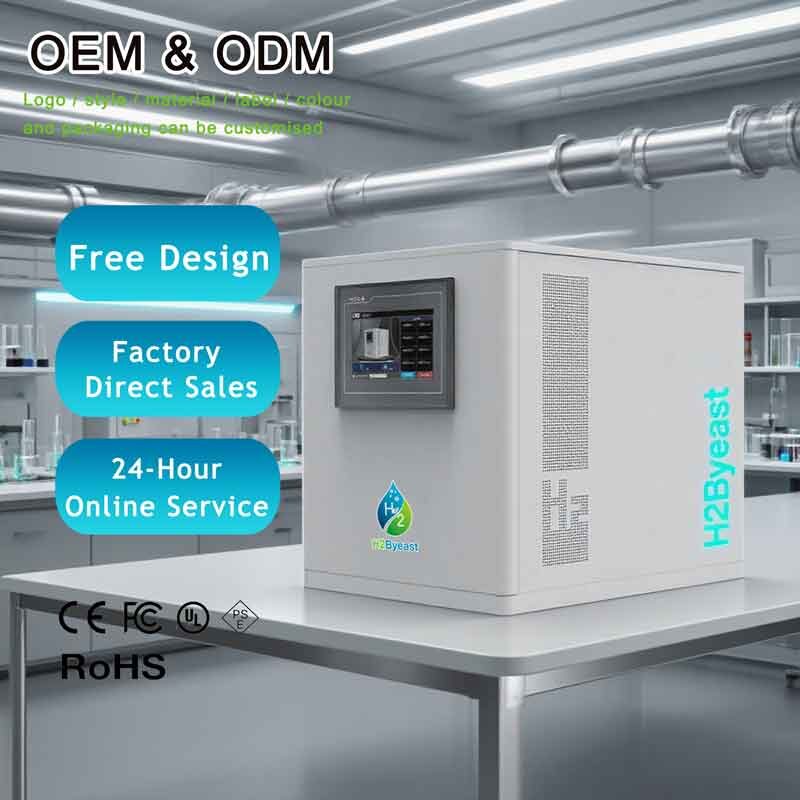
Application Scenarios:: Household hydrogen production for refueling hydrogen-powered bicycles; Stable gas source for semiconductor & electronics, petrochemical & chemical synthesis, metal heat treatment & powder metallurgy; Laboratory use
Application Scenarios:: Household hydrogen production for refueling hydrogen-powered bicycles; Stable gas source for semiconductor & electronics, petrochemical & chemical synthesis, metal heat treatment & powder metallurgy; Laboratory use
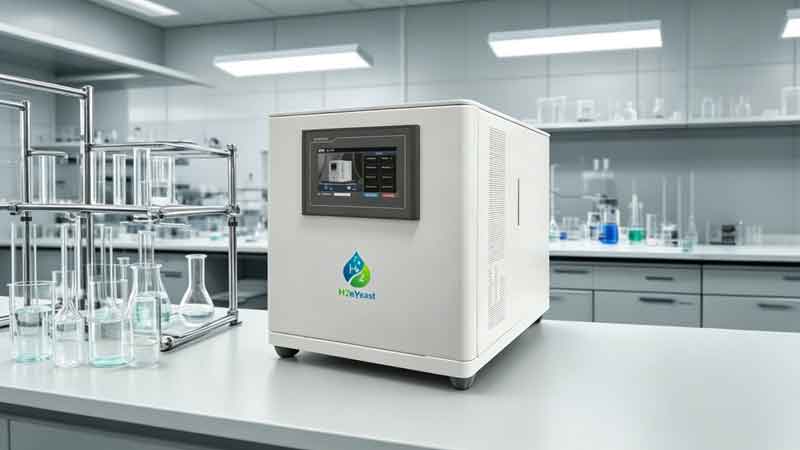
Designed for demanding environments where stable hydrogen supply, purity consistency, and integration reliability are critical to outcomes.
Stable, pure on-site hydrogen for analytical instruments, GC/MS, fuel cell research, and university laboratories -- eliminating cylinder logistics.
Continuous, pressure-stable hydrogen supply matched to test-bench flow profiles, suitable for performance mapping, durability, and degradation studies.
High-purity hydrogen for chemical vapour deposition, crystal growth, sintering atmospheres, and pilot-scale material processing in research facilities.
Core PEM module with documented mechanical, gas, electrical, and communication interfaces for equipment manufacturers building hydrogen-integrated systems.
On-site hydrogen generation for selected industrial processes -- metal heat treatment, glass polishing, electronics manufacturing -- where cylinder supply is impractical.
Safe, controlled hydrogen supply for vocational schools, universities, and hydrogen competence centres with experiment content and operator training support.
Before on-site generation, teams face unreliable supply chains, purity uncertainty, safety administration, and integration complexity that slow research and production.
High-pressure cylinder logistics, refill lead times, and fluctuating supply interrupt work schedules and create safety administration overhead.
Batch-to-batch cylinder purity variation and moisture ingress compromise analytical results, fuel cell test data, and process repeatability.
Undocumented or non-standard interfaces add engineering risk for OEM integrators and system builders that need predictable mechanical, electrical, and control interfaces.
Equipment failures without clear service response, spare-part lead times, or remote diagnostic capability create unplanned downtime in production and research.
Customers in regulated industries need clear certification scope, applicable standards, and documented compliance statements -- not management certificates presented as product certification.
Quoted specifications without operating conditions, duty cycle, or measurement basis leave buyers unable to verify suitability before purchase or site acceptance.
Design decisions, manufacturing practices, and service commitments that reduce integration risk and support long-term operational reliability.
PEM electrolysis enables rapid load following and consistent output across the rated flow range, reducing downstream pressure fluctuations and protecting sensitive instruments.
Purity specifications are stated with measurement basis and applicable operating conditions -- not as maximum values under ideal and unrepeatable conditions.
Interface control documentation covers gas connections, electrical supply, communication protocols, and safety interlocks -- reducing OEM integration risk and project timelines.
Each unit completes factory acceptance testing covering rated performance, safety function verification, and agreed acceptance criteria before shipment.
Safety certifications are presented with model coverage, applicable standard, issuing body, and regional validity -- not as generic corporate quality credentials.
Documented spare-part catalogue, remote service support, and defined response commitments reduce downtime risk and total cost of ownership over the equipment life.
All specifications stated at rated operating conditions. Performance at partial load, elevated temperature, or non-standard water quality may differ. Confirm with technical team for project-specific requirements.
| Parameter | HB-HGG-L04-P1.5 |
|---|---|
| Rated H₂ Flow (Nm³/h) | 0.4 |
| H₂ Purity (%) | 99.99 |
| Outlet Pressure (MPa) | 1.6 |
| Power Consumption | - |
| Power Supply | 220V |
| Water Requirement | Purified Water |
Understand the conditions under which rated performance is guaranteed and where technical confirmation is required before project commitment.
Specifications apply at rated load, controlled ambient temperature (typically 5-40 °C), compliant feed-water quality, and stable input power within specified tolerance. Confirm exact rated conditions with the product datasheet.
Most models support turndown from rated flow. Minimum stable flow, purity at part-load, and control response at low load should be confirmed per model during application review.
High-altitude installation (>2,000 m), ambient temperatures above 40 °C, extremely high humidity, or corrosive atmospheres require engineering review before order confirmation. Do not assume standard performance applies.
PEM electrolysis requires deionised or reverse-osmosis purified water meeting specified conductivity thresholds. Operating on tap water or non-compliant feed will reduce stack life and void performance guarantees.
Stable AC supply within rated voltage and frequency tolerance is required. Operation with significant harmonic distortion, frequent power interruptions, or unbalanced three-phase supply requires confirmation and may need power conditioning.
Rated outlet pressure is the maximum delivery pressure. Systems requiring higher downstream pressure or pressure boosting must include appropriate compression equipment outside the scope of this unit.
The complete system integrates the PEM stack, balance-of-plant, controls, and safety functions into a single engineered unit. Optional modules extend capability for specific applications.
| Component | Function |
|---|---|
| PEM Electrolyzer Stack | Core hydrogen generation via solid polymer electrolysis |
| Feed-Water System | Water circulation, level control, and feed quality management |
| Gas-Liquid Separation | Wet hydrogen drying and liquid-gas boundary control |
| Purification Unit | Catalytic drying and molecular sieve to rated purity |
| Pressure Control | Regulated outlet pressure within specified range |
| Safety System | Leak detection, over-pressure protection, and emergency shutdown |
| Control Unit | PLC-based local HMI with process monitoring and alarm management |
| Enclosure | Industrial-grade cabinet with ventilation and cable management |
| Module | Application |
|---|---|
| Water Treatment Unit | On-site DI/RO water preparation integrated with the generator |
| Hydrogen Buffer Storage | Small buffer tank for demand peaks or steady-pressure supply |
| Remote Monitoring Module | Cloud/SCADA connectivity for remote status and alarm notification |
| Extended Certification Package | Additional regional safety certifications for specific export markets |
| Custom Communication Interface | Modbus TCP, Profibus, EtherNet/IP, or project-specific protocols |
| Outdoor / Weatherproof Enclosure | IP-rated cabinet for outdoor or semi-outdoor installation |
The PEM electrolysis process converts deionised water into high-purity hydrogen through a closed electrochemical system with integrated purification and pressure management.
Model selection depends on required hydrogen flow, outlet pressure, duty cycle, installation constraints, and downstream application. Contact our technical team if your requirement falls between models or requires customisation.
| Rated Flow | 0.4 Nm³/h |
| Purity | 99.99% |
| Outlet Pressure | 1.6 MPa |
| Power | - |
Use this section for preliminary installation planning and OEM interface design. Refer to the dimension and interface drawing for exact tolerances and connection specifications.
| Parameter | Value / Description | Note |
|---|---|---|
| Overall Dimensions | 500*400*505mm | STD |
| Equipment Weight | -- | STD |
| Gas Interfaces | -- | STD |
| Electrical Interfaces | -- | STD |
| Communication Protocols | -- | OPT |
Dimension drawing -- refer to official drawing for installation use.
Correct installation environment is a prerequisite for rated performance, safety compliance, and warranty validity. Review all conditions before site preparation.
Standard operating range: 5-40 °C ambient. Relative humidity should not cause condensation on equipment surfaces. Cold-start and high-humidity operation require technical confirmation.
Installation surface must support the rated equipment weight plus installation hardware and ancillary equipment. Confirm floor load ratings with facilities team before equipment arrival.
Installation space must provide adequate natural or forced ventilation to prevent hydrogen accumulation. Hydrogen detectors must be installed at appropriate locations per local safety standards.
A compliant DI/RO water supply at the specified flow rate and conductivity must be available at the equipment inlet connection. Integrated water treatment is available as an optional module.
Dedicated electrical supply within rated voltage and frequency tolerance, with appropriately sized circuit protection and grounding per local electrical codes. Confirm power quality if grid stability is uncertain.
Installation above 2,000 m elevation, in explosive-atmosphere zones, or in corrosive environments requires engineering review and may require modified equipment specification before order.
Site utility planning should be based on rated consumption plus appropriate margin for startup transients and auxiliary equipment. Values below are at rated load.
| Model | Power Consumption | Power Supply | Water Requirements |
|---|---|---|---|
| HB-HGG-L04-P1.5 | - | 220V | Purified Water |
Safety systems are integrated into the standard configuration. Certifications are listed with defined model coverage and applicable scope -- not as general corporate quality credentials.
| Function | Trigger / Action |
|---|---|
| Hydrogen Leak Detection | Sensor alarm and automatic emergency shutdown |
| Over-Pressure Protection | Safety relief valve and automatic isolation |
| Power Failure Response | Safe state entry and controlled shutdown sequence |
| Water Level Control | Circulation system shut-off on low/high level alarm |
| Temperature Monitoring | Stack and cooling circuit thermal protection alarm |
| Emergency Stop | Manual E-stop with visual indicator on enclosure |
| Alarm Management | Categorised alarms on HMI with event logging |
The control system supports local operation with HMI, remote monitoring, and integration into plant automation and laboratory data systems.
| Feature | Description | Config |
|---|---|---|
| Local HMI | Touchscreen or panel-mount display for process monitoring, setpoint entry, alarm review, and manual control | STD |
| Process Data Logging | Onboard logging of key parameters with timestamped event history | STD |
| Remote I/O | Digital and analogue I/O for SCADA/DCS integration -- dry contact run/stop, alarm output, flow and pressure analogue signals | STD |
| Modbus RTU / TCP | Standard communication protocol for plant-level integration and remote data acquisition | OPT |
| Other Protocols | Profibus DP, EtherNet/IP, Profinet, or custom protocols subject to project specification | TBC |
| Remote Monitoring | Cloud-connected telemetry for status, alarm notification, and diagnostics -- requires network access at installation site | OPT |
Documentation is available at appropriate stages of the project. Certain documents require an NDA or confirmed project before release.
Specifications, utilities, dimensions, and performance at rated conditions.
Request document →Mechanical envelope, gas/electrical connection locations, and installation clearance requirements.
Request document →Full ICD covering gas, electrical, control, and communication interfaces for OEM integration. Available on request.
Request ICD →Product safety certification with defined model coverage, applicable standard, issuing body, and regional validity scope.
Request certification →Factory acceptance test checklist and results template for review before shipment approval. Available pre-order.
Request template →Recommended spare parts list with part numbers, lead times, and stocking recommendations by operating hours interval.
Request catalogue →Every unit completes a documented factory acceptance test before shipment. FAT results are available for customer review and provide the basis for site acceptance.
Component traceability, assembly records, and visual inspection per build specification before testing begins.
Control system, HMI, safety interlocks, alarm logic, and communication interfaces verified against design specification.
Hydrogen flow rate, purity, outlet pressure, and power consumption measured and recorded at rated operating conditions.
Leak check, over-pressure relief, emergency shutdown, and sensor response tested and documented against acceptance criteria.
Export-grade packaging protects equipment during international shipping. Delivery scope and Incoterms are confirmed during contract review.
Wooden crate with internal shock-absorption, moisture barrier, and clearly marked lifting and orientation indicators. Packaging specification available on request.
Sea freight (FCL/LCL), air freight, and road transport available depending on unit size, urgency, and destination. Incoterms confirmed per contract -- EXW, FOB, CIF, DAP available.
Commercial invoice, packing list, certificate of origin, FAT report, and applicable certificates provided with each shipment. Import documentation requirements confirmed per destination country.
Planned maintenance intervals, spare-part availability, and remote diagnostic support reduce unplanned downtime and extend equipment service life.
| Interval | Task | Scope |
|---|---|---|
| Daily | Visual check, alarm review, water quality check | Operator |
| Monthly | Filter inspection, gas connection leak check, sensor calibration check | Operator / Service |
| 6 Months | Filter replacement, deionisation media check, full system function test | Service |
| Annual | Full inspection, PEM stack condition check, safety system recertification, consumables replacement | H2Byeast / Authorised |
| Stack Life | Stack replacement based on operating hours, performance degradation assessment, and application review | TBC |
Remote access for fault diagnosis and parameter review where connectivity is available.
Documented spare-parts catalogue with part numbers, recommended stockholding, and lead times.
On-site or remote operator training covering daily operation, alarm response, and routine maintenance.
Engineering support via email and video call. Response time commitments confirmed in service agreement.
Technical capability demonstrated through patents, standard participation, factory testing, and project delivery -- not marketing claims.
Technical and project questions addressed before you begin your evaluation. More complex questions are best answered during an application review call.
Ask a specific question →Provide as much detail as possible about your application, hydrogen requirements, installation environment, and project timeline. Our technical team will review and respond within 2 business days.